New Polling: As Trump’s War Drives Up Energy Prices, Americans Call for Corporate Profiteering Crackdown
New Polling: As Trump’s War Drives Up Energy Prices, Americans Call for Corporate Profiteering Crackdown
As President Trump’s escalating war with Iran pushes energy prices higher, Americans are looking for ways to keep electricity bills in check. New polling from Groundwork Collaborative and Data for Progress reveals Americans reject the Trump Administration’s plan to rely on voluntary commitments from corporate actors to lower household bills.
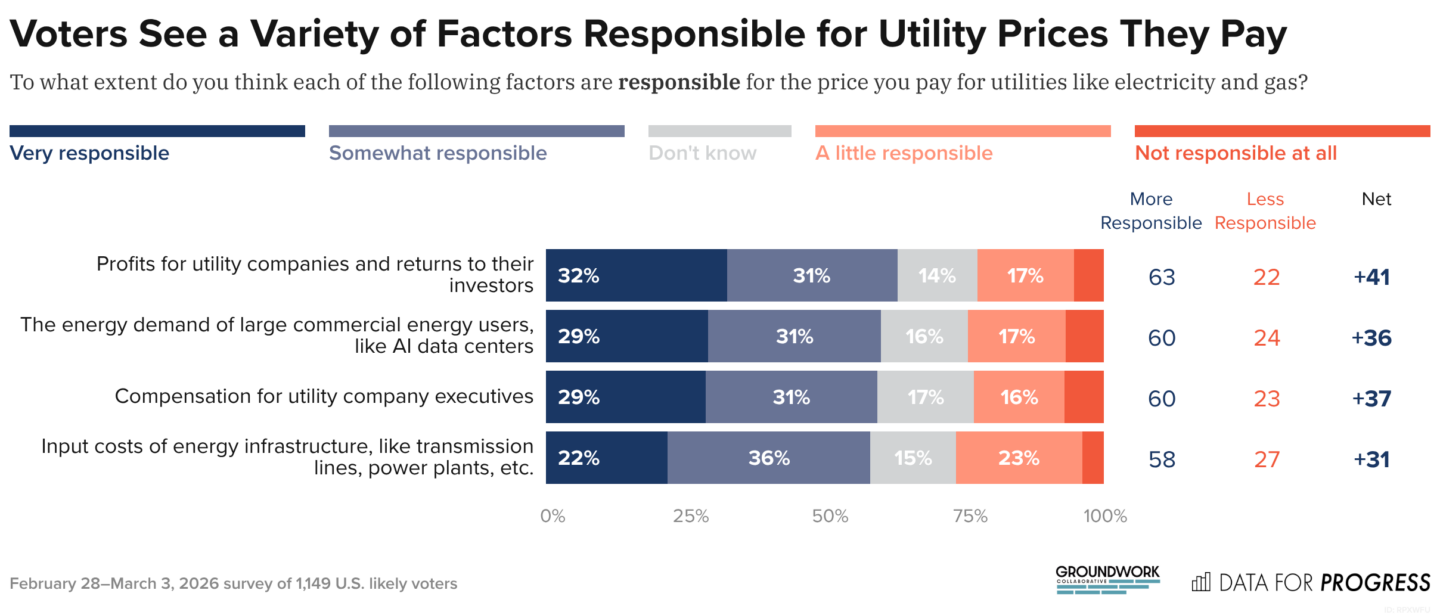
While nearly 90% of Americans say the war on Iran will raise prices on essential items, 60% of voters also view energy demand generated by large commercial energy users as a key driver of rising electricity costs. But rather than take meaningful steps to rein in Big Tech, Trump gathered executives at the White House this month to sign unenforceable “pledges” that their companies will protect Americans from utility bill increases tied to the growing energy demands of their data centers.
Groundwork’s polling shows that Americans reject this reliance on corporations to do the right thing: 60% of voters prefer public sector leadership on energy, saying the public sector should run both grid modernization (60%) and the utilities themselves (58%), as opposed to the private sector.
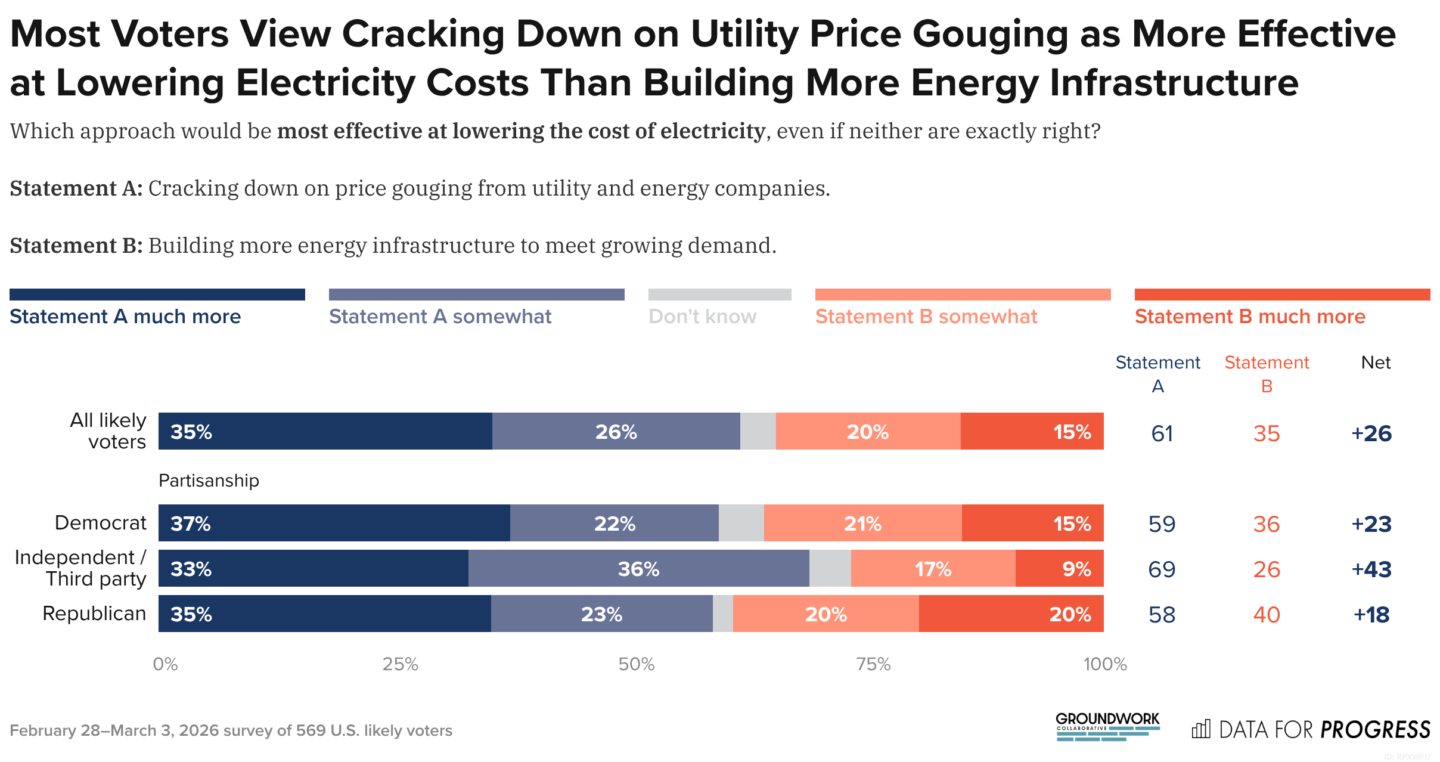
The new polling also finds that most voters believe cracking down on corporate price gouging is the most effective way to lower electricity bills over simply increasing supply to meet growing demand.
Groundwork’s Managing Director of Policy and Advocacy, Elizabeth Pancotti, shared her reaction:
“Utility prices are up and consumers know the truth: these price increases are being driven by corporate greed and unchecked AI data center growth. Voters feel ripped off by the corporations who hold their utilities hostage and are calling on lawmakers to put an end to the profiteering racket. It’s time for regulators and policymakers to answer the call to protect working families from predatory utility corporations and Big Tech.”
Key Takeaways:
- Voters say their electricity bills are up and hold a range of corporate actors responsible.
- Two-thirds of voters say their monthly electricity bill has gone up in the past year, including 21% who say it has gone up “a lot.” A plurality of voters (41%) report paying between $101-$200 per month.
- Voters hold corporate actors accountable for rising costs of utilities including electricity and gas, in particular: utility company profits, compensation for business executives, and energy demands related to AI data center growth.
- Big Tech companies and the AI technology they create are unpopular with voters:
- Across the board, energy superusers are unpopular with voters, with cryptocurrency companies (-28 net unfavorability), AI data centers (-16) and AI companies (-8) all underwater with voters.
- Voters across party lines oppose the construction of new AI data centers in their community (57%) and even more (65%) say new AI data centers will raise their energy bills.
- Majorities of voters believe the development of AI technology in general will lead to fewer jobs in their local community (51%) and the country overall (57%).
- Voters want to see federal action to lower costs and rein in Big Tech.
- When choosing between ‘cracking down on price gouging from utility and energy companies’ versus ‘increasing supply to meet growing demand,’ six in ten voters say the former is most effective at lowering the cost of electricity, more than double who side with supply (26%).
- Voters say the public sector, not the private sector, should lead on energy:
- Majorities of voters across party lines prefer public-sector leadership, saying the public sector should run both grid modernization (60%) and the utilities themselves (58%).
- Voters overwhelmingly say Big Tech companies building data centers should bear the cost of grid upgrades (76% say they should pay all or most of the cost). Meanwhile, large numbers say ‘utility customers’ (62%) and ‘the government, using taxpayer dollars’ (40%) should pay nothing.