
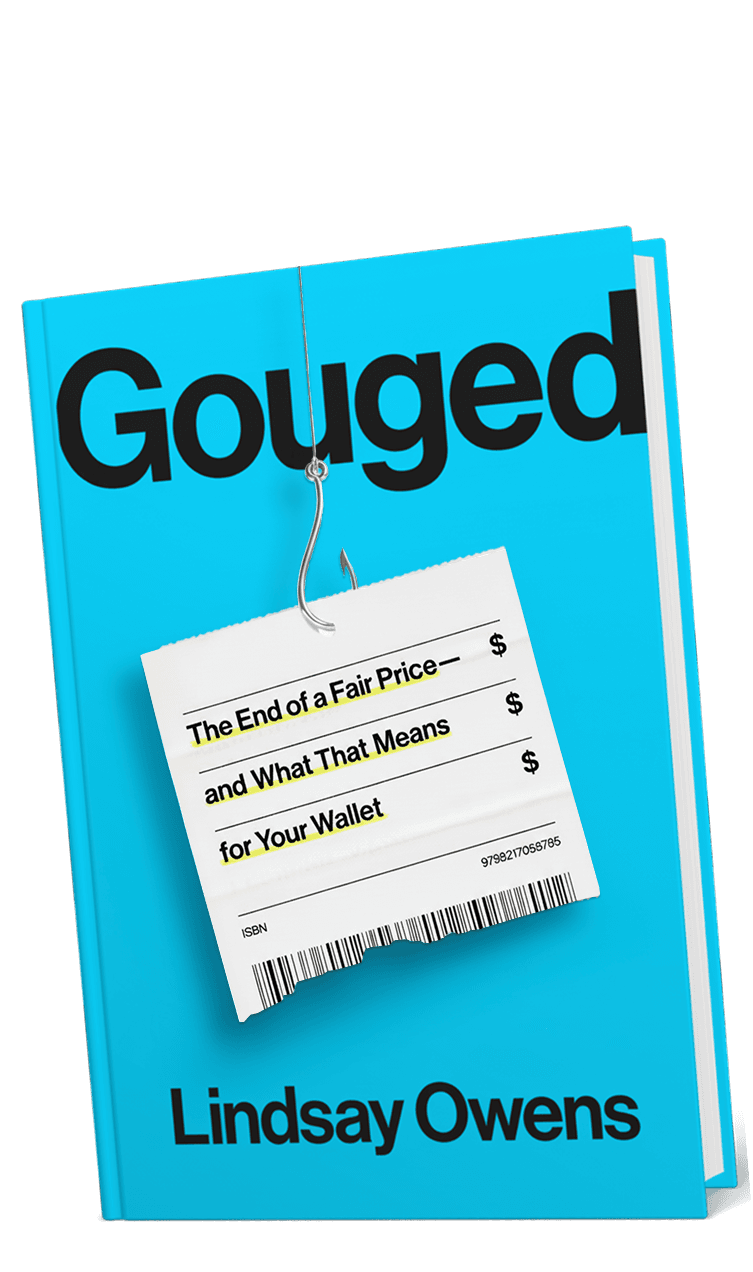
A new book by Lindsay Owens
The End of a Fair Price – and What That Means for Your Wallet
Available now
Higher borrowing costs are affecting how businesses set prices and hire workers. Among Texas firms reporting an increase, 59% have raised prices or plan to, while 42% have reduced or plan to reduce hiring. https://www.dallasfed.org/research/surveys/tmos/2026/2610
The price of Reese's Peanut Butter Pumpkins has increased nearly 25% in 2026.
I started following @owenslindsay1 years ago b/c she was one of the few reporters who bothered to listen in on quarterly earnings calls where CEOs were openly bragging about price gouging during COVID so I'm VERY excited to dig in to her new book. Congratulations, Lindsay!
NEW ODD LOTS:
@tracyalloway and I talk to @owenslindsay1 about the state of the art technology that companies are finding to figuring the maximum price you will pay for something.
New York state would be the largest state to ban surveillance pricing.... if @GovKathyHochul would sign the bill sitting on her desk.
As @SRuhle on @MSNOW says, "Governor Hochul, we're looking at you."
It's not just the usual bad guys ripping you off anymore – even your area museum or zoo can use "rainy days" as an excuse to charge you more.
@owenslindsay1 went on @MSNOWNews to discuss how deceptive pricing practices are popping up everywhere from Walmart to kids' museum.
What if the person buying the exact same groceries as you was paying less?
An investigation found Instacart used AI-powered pricing experiments to show shoppers different prices for identical items — sometimes up to 23% higher.
@owenslindsay1 of @Groundwork explains.
More than half (53%) of manufacturers surveyed by the Kansas City Fed reported that customers have become more price-sensitive over the past six months. Manufacturers also shared their experiences with rising costs and pricing decisions:
Walmart doesn’t need to know:
where you live
where you work
where your kids practice soccer
what restaurants you go to
what you post online
how fast your heart is beating
And yet, somehow, there’s a patent for that.
ICYMI: Halloween candy prices are up 15% from last year, 4x the rate of overall inflation.
Our new report w/ @Groundwork finds that major candy makers are keeping prices high while families are increasingly turning to debt to get by.
Read more in @ScrippsNews:
Do you know what's really driving up your candy costs?
@abc15 used our data to make a candy interactive guide – so you can see how much your costs will go AND who's benefiting.
This Halloween is shaping up to be full of more tricks than treats – with candy favorites costing 15% more on average this year.
No matter how working families plan to celebrate, Trump’s ghoulish policies & frighteningly high prices are sure to haunt families' budgets.
Halloween candy price update: According to @Groundwork, Sour Patch Kids and Swedish Fish gummies are up 39%, Reese’s peanut butter cups 23%, and Butterfinger, Crunch, Baby Ruth and 100 Grand chocolate nearly 19%.
I’ll discuss on @610wtvnnews at 8AMET.
NEW profile of our @owenslindsay1, discussing her new book, "Gouged," the increasingly sophisticated technologies corporations are using to squeeze consumers, & what policymakers can do to restore fairness to our economy.
Read the full conversation 👇
Thanks to Trump, this Halloween is frightening for all the wrong reasons.
Spooky season should be about candy and decorations – not scary price hikes.
But candy favorites will cost more than 15% more than last year, in new analysis from us and @TCFdotorg.
